 AdCrossLab
A first-party case study for international teams planning B2B marketing in China. It compares an anonymised influencer-marketing brand’s image ads that met the spending threshold and the buying context behind their results.
In this sample, Xiaohongshu generated a higher reported click-through rate, while cost per click was only modestly lower than Tencent’s. Both platforms produced enquiry-related events. The available data does not establish which platform delivered higher-quality sales opportunities or a lower customer acquisition cost. For a B2B brand, choose and optimise around buyer fit, evidence of the product workflow, the approved enquiry path and CRM-qualified outcomes. Adapt the creative to its viewing context, then test it.
Which is better for B2B lead generation in China: Tencent Ads or Xiaohongshu?
Xiaohongshu was stronger on reported CTR in this case; neither platform can be declared the winner on qualified B2B leads. Across eligible units, Xiaohongshu recorded 4.18% CTR and RMB 3.04 CPC. Tencent recorded 1.09% CTR and RMB 3.34 CPC. Xiaohongshu’s reported private-message lead cost was RMB 176.80. Tencent’s cost per reported lead form submitter was RMB 388.15, and its cost per reported WeCom conversation starter was RMB 188.27. These events describe different actions, with different attribution definitions and reporting units.
The practical opportunity is to test Xiaohongshu for problem recognition, product research and in-platform enquiry, and Tencent inventory for a clear proposition connected to a usable lead or conversation destination. These are strategic hypotheses for this product. They do not imply that one platform only builds awareness or that the other only converts.
This article helps overseas B2B founders and marketing teams researching how to advertise in China and reach Chinese-speaking business buyers. It compares Tencent Ads and Xiaohongshu advertising through an anonymised influencer-marketing workflow case, covering image-ad creative, traffic costs, enquiries and localisation. The product shown manages overseas influencer campaigns; the China advertising discussed here is the advertiser’s own effort to acquire Chinese-speaking business buyers. Its case does not establish demand for every foreign SaaS product, consumer brand or industry.
What data should you use to compare Tencent and Xiaohongshu image ads?
Use the same observation period, an explicit spending threshold and a documented unit of analysis. The period here is 1 August–13 October 2026. Sources were retrieved on 14 October 2026. Every included Tencent image component and every Xiaohongshu creative instance featuring an image-and-text note spent strictly more than RMB 500 during that period. Video, account-wide dashboards and units at or below RMB 500 are excluded from the performance analysis.
Archived dataset, not the live library total. The tables, figures and downloadable inputs in this article retain the 14 October daily-export snapshot. The library's 15 October cumulative-report check sums to RMB 150,989.75 for the same 33 Tencent components, compared with RMB 150,989.87 in this archived daily export. The named business counts match; the RMB 0.12 difference is retained as a report-basis reconciliation, not a proven rounding adjustment. The live library also includes a wider Xiaohongshu note sample and date coverage than this article's 13 creative instances. Do not combine these differently scoped totals.
| Method | Tencent | Xiaohongshu |
|---|---|---|
| Data source and reporting unit | Authorised daily creative-component export; rows filtered to image components and aggregated by component ID. | Authorised creative-management export with the “image-and-text note” filter; period totals per creative instance checked against the live table. |
| Eligible units | 33 image components | 13 creative instances using 9 distinct notes |
| Duplicates and reuse | A component can appear in multiple ads and be paired with different copy. | A note can be reused across campaigns; each creative instance must independently exceed the threshold. |
| Included statuses | Historical delivery rows retained. | Historical results retained even when a creative is now paused or rejected. |
This is a retrospective, non-random sample from one product. Tencent components and Xiaohongshu creative instances are not identical statistical units. Nine notes are not thirteen independent creative concepts. Component-level exposure can differ from complete-ad exposure. Reported user counts summed across days or creatives are not a CRM-deduplicated count of unique buyers. The RMB 500 filter improves practical relevance but is not proof of statistical significance; it also favours creatives that received more delivery.
All rates below are calculated from summed counts, rather than averaging row percentages. Download the 46 eligible units and calculation inputs. Empty event fields in the download mean “not available for this platform”, not zero.
What were the CTR, CPC and CPM of B2B image ads on each platform?
The difference in CTR was much larger than the difference in CPC. This matters because a compelling cover can attract clicks in an expensive impression environment without materially reducing the cost of acquiring traffic.
| Eligible-sample metric | Tencent image components | Xiaohongshu note creatives |
|---|---|---|
| Summed reported spend, RMB | 150,989.87 | 19,271.42 |
| Reported impressions | 4,150,966 | 151,798 |
| Reported clicks | 45,267 | 6,349 |
| Weighted CTR | 1.09% | 4.18% |
| Calculated CPC, RMB | 3.34 | 3.04 |
| Calculated CPM, RMB | 36.37 | 126.95 |

Using unrounded inputs, Xiaohongshu’s CTR was 3.84 times Tencent’s. Its CPC was about 9.0% lower, while its CPM was 3.49 times higher. The arithmetic is CTR = clicks ÷ impressions, CPC = spend ÷ clicks and CPM = 1,000 × spend ÷ impressions. With CTR expressed as a decimal, CPC = CPM ÷ (1,000 × CTR).
A buyer cannot infer that Xiaohongshu is “3.84 times more effective”. A cover click, a complete-ad click, an enquiry and a sales opportunity are different outcomes. Placement mix, delivery optimisation and audience differences can all affect these figures.
Can you compare Tencent lead costs with Xiaohongshu private-message leads?
Only after aligning event definitions, attribution windows and buyer qualification. The observed report contains the following event totals and cost-per-reported-outcome calculations. They are shown separately so a reader can identify the business action being purchased.
| Platform | Reported metric (English) | Summed reported count | Spend ÷ count, RMB |
|---|---|---|---|
| Tencent Ads | Lead form submitters | 389 | 388.15 |
| Tencent Ads | WeCom conversation starters (after adding a contact) | 802 | 188.27 |
| Xiaohongshu | DM conversation starts | 163 | 118.23 |
| Xiaohongshu | DM leads captured | 109 | 176.80 |
The metric labels used here are English explanations of the platforms’ Chinese report labels, rather than quoted official English interface names. Tencent reports users who submit a lead form or start a conversation after adding a WeCom contact; Xiaohongshu reports attributed direct-message (DM) conversation-start and lead-capture events. User-count and event-count fields must be kept separate. A form submission is not a confirmed appointment, and a captured lead is not automatically a qualified business buyer.
Tencent also reported 339 users showing order intent after a conversation across eligible source rows. This metric describes reported intent, not paid orders or revenue. Do not add Tencent lead form submitters, WeCom conversation starters and users showing order intent to manufacture a total lead count: the groups can overlap.
Each cost above divides the entire eligible platform sample’s reported spend by its named event total. Tencent components were used across multiple optimisation objectives. The blended cost per lead form submitter therefore is not the cost per conversion of a dedicated lead-form campaign. Summed component-associated spend should not be interpreted as the advertiser’s total billed spend across the account.
Xiaohongshu’s official reporting manual specifies a seven-day attribution window for private-message leads and a one-day window for private-message starts. It also explains why advertising-report likes can exceed likes visible on the original note. Consequently, these counts are not a sequential, same-cohort funnel. The Tencent export does not establish an equivalent conversion window, and this case has no reconciled cross-platform CRM opportunity or revenue data.
Use a CRM definition such as “reachable company contact, relevant buying role, supported market and a stated business need”. Apply the same definition to both channels. Then calculate cost per qualified lead (CPQL): CPQL = media spend ÷ deduplicated qualified leads, followed by cost per accepted opportunity and cost per acquired customer for mature cohorts. Until that is done, the smaller reported event cost is a test priority, not a business winner.
How do Tencent and Xiaohongshu platform cultures change B2B ad creative?
For this B2B product, test platform-native relevance on Xiaohongshu and professional credibility in the selected Tencent placement. On Xiaohongshu, platform-native relevance means a cover, title and opening that feel familiar to a practitioner doing the work: a recognisable launch deadline, a frustrating outreach task or a practical question. On Tencent, professional credibility means that a buyer can quickly understand the product category, the business benefit, the evidence and the next step. These are creative hypotheses informed by the observed examples, not measured platform-wide requirements.
Both qualities matter on both platforms. A polished Xiaohongshu note can be relevant, and a conversational Tencent ad can be credible. Professional does not simply mean corporate graphics; native does not require slang or a meme. The strategic difference to test is how the ad earns attention and then supports evaluation, rather than how expensive or informal it looks. Platform context, buyer role and proof of the offer should each inform the brief.
| B2B creative decision | Tencent image-ad hypothesis | Xiaohongshu note-creative hypothesis |
|---|---|---|
| Viewing context | Name the actual inventory. Tencent spans multiple applications, so creative designed for WeChat Moments need not suit every other placement. | Separate browsing from search. A searcher may need an answer about a task; a feed viewer first needs a reason to open the note. |
| Attention and tone | Test a concise business proposition with a clear visual hierarchy. Make the buyer’s problem and the reason to consider the offer visible at a glance. | Test practitioner language and an immediately recognisable work situation. In search, make the cover and title answer the intended query; in feed, make the opening earn a closer look. |
| Depth and trust | Carry the promise into a product page, case or approved consultation destination. | Use the full note and image sequence to show how the product works, conditions and limitations. A brand or employee account provides context, not automatic proof. |
| Buyer role | Connect the compact proposition to the evaluation needs of the relevant practitioner, team lead or budget owner. | Use practitioner relevance to attract attention, then show team-level value and commercial fit so recognition of a task can lead to a buying discussion. |
| Language | Use clear Chinese business language and placement-compliant copy. | Translate the buyer’s problem into natural Chinese. Use practitioner language when useful, while keeping business relevance visible. |
| Response | Match the ad to the supported form or conversation action. | Prepare useful, timely in-platform replies that answer price, suitability and implementation questions. |
Tencent’s official product overview describes a multi-application marketing system with creative, placement and digital-asset tools. The observed Tencent examples below are landscape images. The Xiaohongshu examples include portrait and square images. These are actual asset shapes, not universal platform specifications. Confirm current size, crop, text and destination rules in the selected placement before production.
The observed Xiaohongshu covers include both polished brand artwork and a dense workplace illustration. “Native” therefore does not mean “unbranded” or “a meme always performs better”. For this B2B product, native relevance means that the reader recognises a real task and can evaluate the proposed solution.
Turn this macro comparison into three briefing decisions before designing individual images: identify the actual placement or search task, choose the buying role, and specify the proof that role needs. Then test the tone within a comparable campaign setup. The exports do not isolate a “native versus professional” treatment, so they cannot establish that either style caused a platform’s CTR or lead cost.
What do effective B2B image ads look like on Tencent and Xiaohongshu?
The useful contrast is a compact acquisition promise versus a note that can explain a business workflow. Original ad creatives are shown with advertiser names and logos pixelated for privacy. The surrounding artwork and reported campaign metrics are unchanged. Figures written inside the ads are advertising claims; they are not independently verified product performance or guaranteed buyer results.

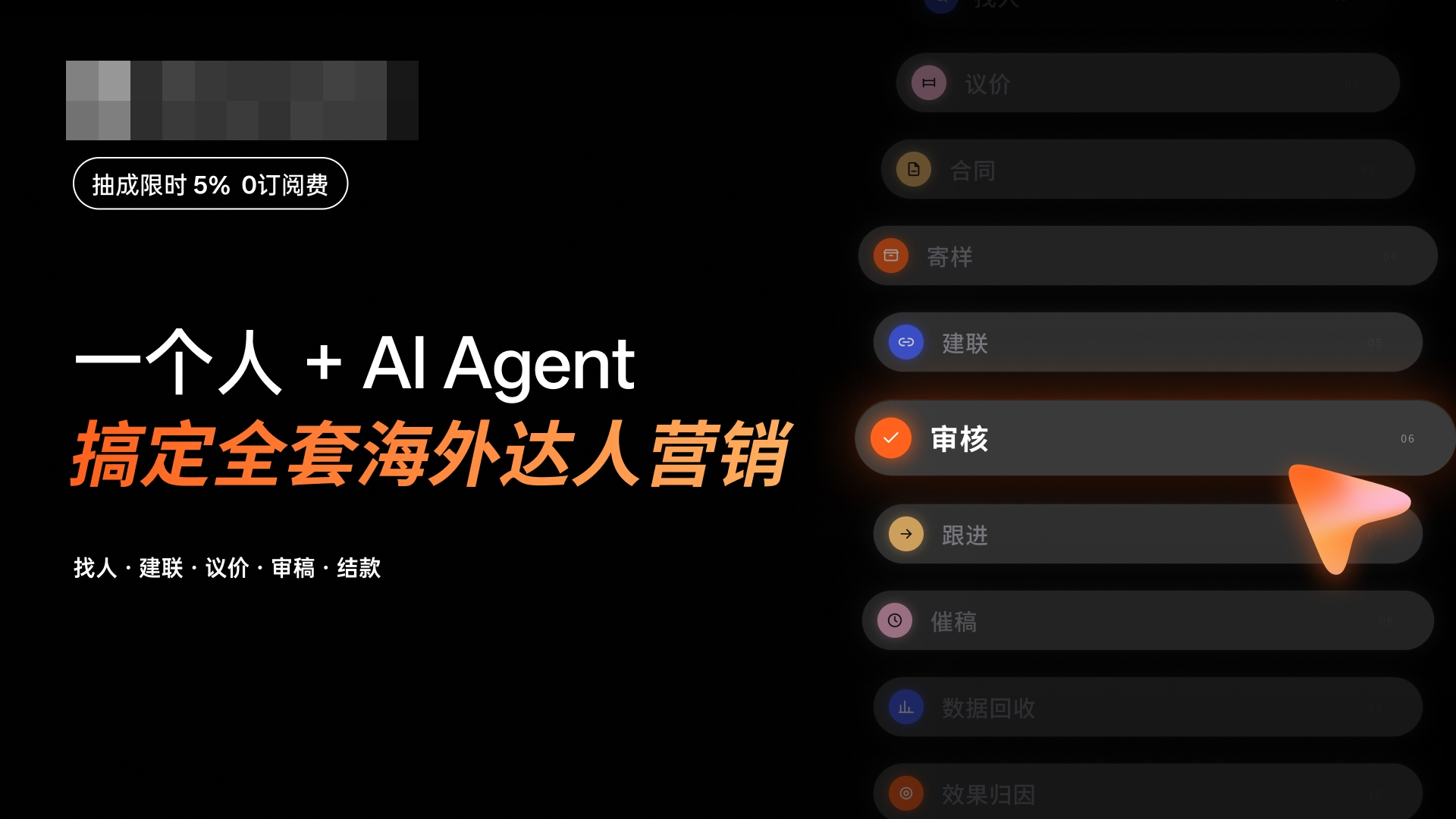

What the two Tencent creatives communicate
The creator-production headline tells the buyer to stop filming every acquisition asset internally and presents overseas creators as a production alternative. The secondary line connects locally produced user-generated content (UGC) with media-buying costs. A dark background, orange emphasis and one main proposition create a compact visual hierarchy. The small footnote qualifies the stated scale as illustrative and dependent on the actual scope of creator collaborations.
The B2B hypothesis is that a concrete production bottleneck can attract a relevant brand or growth team. A useful next test would replace the abstract visual with a verifiable production example while holding the proposition and destination steady. The component was paired with other ad elements, so the image alone cannot receive causal credit for its form results.
The end-to-end workflow image beneath the creator-production image shifts from the production bottleneck to the operating process, with content review highlighted among outreach, negotiation and follow-up steps. Its commercial terms are historical advertising copy, rather than a verified current offer. Together, the two examples illustrate different propositions that can share a professional presentation. They do not form a controlled comparison: their campaign contexts differ, so the reported form costs cannot establish which visual treatment is better.
What the Xiaohongshu creative communicates
The cover begins with a product-launch timing problem and expands into a staffing-and-scale promise. Creator thumbnails help the reader visualise output. The original note contained six images, and its body described execution responsibilities and the creator network. Its quantitative claims need substantiation before another advertiser adapts them.
The B2B opportunity is to turn the cover’s bold promise into an evaluation path: show the matching criteria, outreach workflow, review controls and the work the buyer still owns. Test whether this evidence improves qualified enquiries. Do not copy a large numerical claim merely because it appeared in an ad that received delivery.
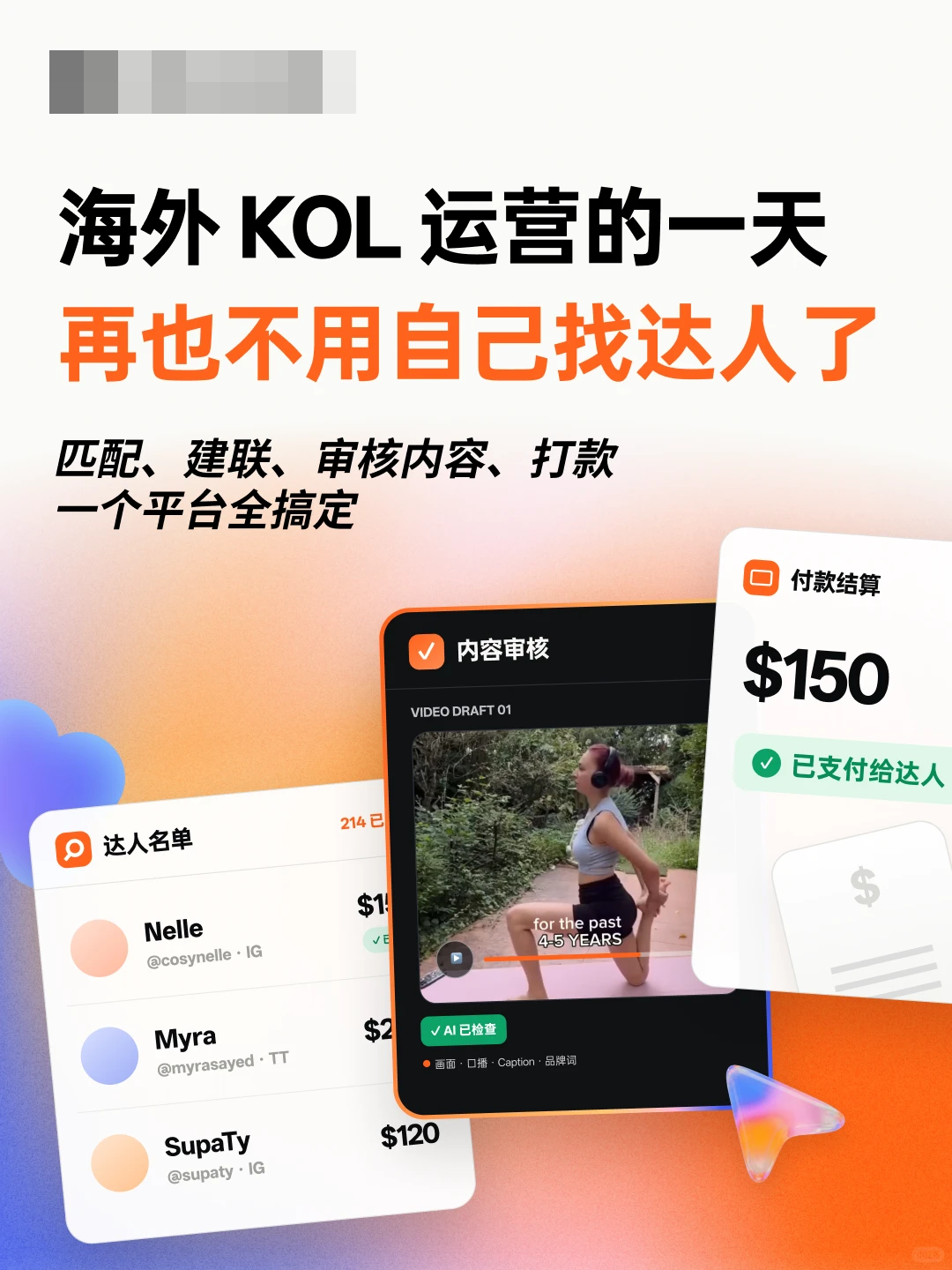
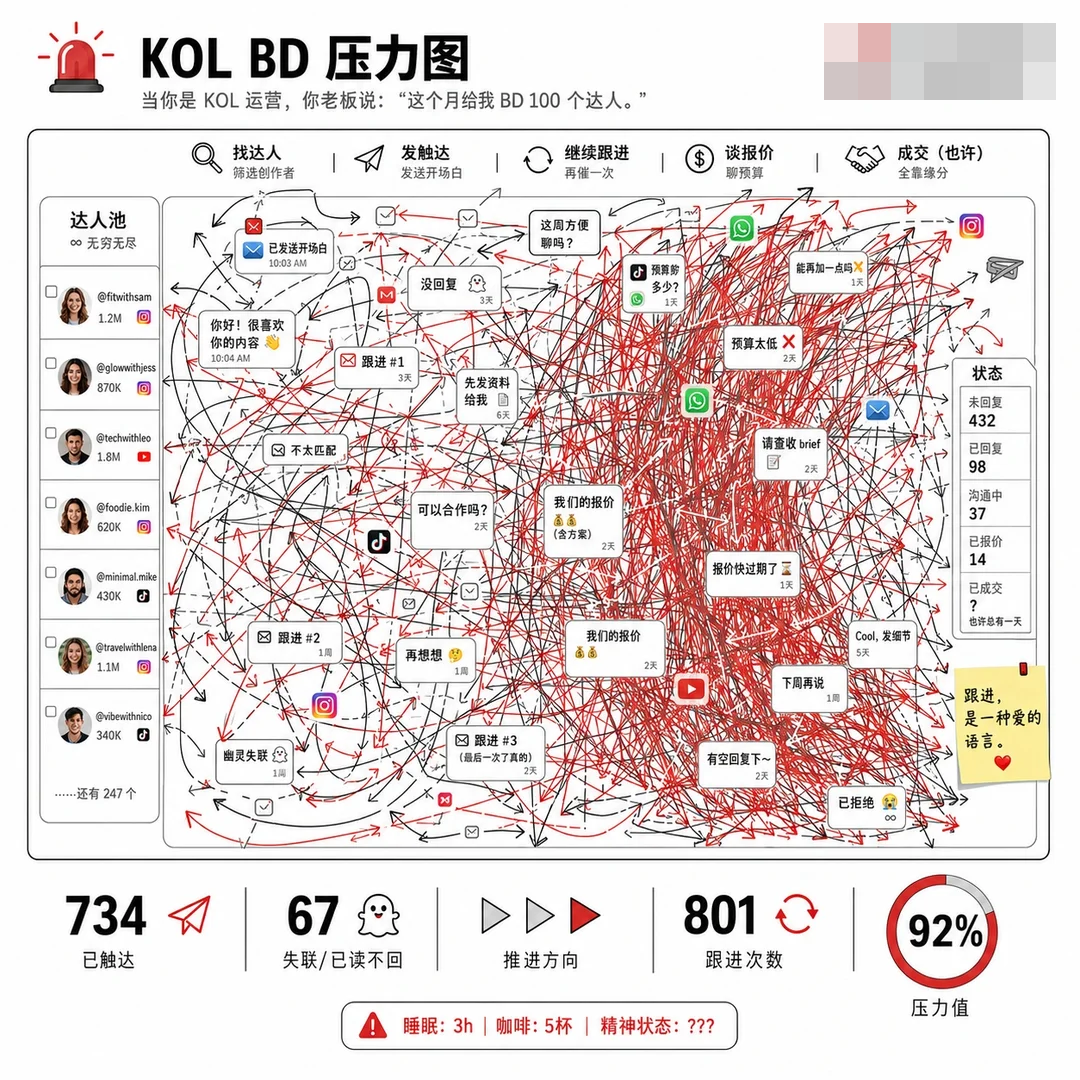
The workflow creative offers a mechanism for solving the problem. The workplace illustration offers recognition and humour around the problem. That distinction is a practical content hypothesis; the small, differently configured campaigns do not prove that either visual mechanism caused the observed result.
Can you reuse the same B2B image ad in Xiaohongshu feed and search campaigns?
You can reuse a concept, but its performance belongs to the campaign context. The product-launch cover shown above belonged to a six-image note that was reused in three eligible Xiaohongshu creative instances. Shared-note reuse was verified in the advertiser’s account; the three instances reported different results. The feed and search labels below are taken from the campaign names; they are not an independently verified inventory breakdown.

The search-labelled instance had 5.50% CTR versus 3.38% for the feed-labelled instance, yet its reported DM lead cost was higher: RMB 205.60 versus RMB 166.07. The note by itself therefore cannot explain the result. Reuse the underlying evidence, adapt the title and opening to the intended search question, and verify actual placement and query reports before treating a campaign-name split as search-versus-feed performance.
Why can high-CTR B2B ads generate costly leads or no leads at all?
Because the reason to click may be broader than the reason to buy. Within Xiaohongshu, the workplace-pain instance shown above had 8.62% CTR and RMB 1.34 CPC, but only five reported DM leads and RMB 252.33 CPL. The product-launch instance shown in the first creative comparison had 3.38% CTR, thirty reported DM leads and RMB 166.07 CPL. The higher-CTR instance’s CPL was approximately 52% higher.

Tencent shows the same diagnostic problem in a different form. One eligible Tencent image component spent RMB 557.04, received 39,332 impressions and 1,878 clicks, and achieved 4.77% CTR. Its export recorded zero lead form submitters, zero online-consultation users and zero WeCom conversation starters. Its cost per outcome is undefined for those zero-count events, not RMB 0. This is a reason to audit the objective, event tracking, traffic and destination; it does not prove that the visual was responsible for the absence of enquiries.
A useful test hypothesis is that relatable practitioner content may attract people who recognise the work but do not own the budget. Another is that the next step fails to answer a buyer’s product questions. Validate these hypotheses with enquiry transcripts, sales qualification and campaign settings before changing the strategy.
How should B2B brands reach decision-makers and avoid low-intent clicks?
Define the buying job before selecting an audience setting. For this product, a relevant buyer manages overseas creator campaigns, faces coordination or production constraints, and can evaluate or influence a software or service purchase. An overseas brand selling a different B2B product should replace these conditions with its own buying process.
- Practitioner: show a specific task, an actionable example and what work the system removes.
- Team lead: show approval controls, workload, repeatability and responsibility boundaries.
- Budget owner: explain commercial terms, implementation effort and how success will be measured.
Do not assume a platform’s demographic profile proves buying authority. Analyse actual qualified enquiries by role, company type, use case and procurement horizon. Use permitted audience tools as hypotheses, then review which buyers arrived. No buyer-role distribution is available in the present exports.
Localisation should clarify the product category, the Chinese task vocabulary and the implementation conditions. Keep pricing, support availability, supported markets and service scope consistent across the ad, note, website and sales reply. This is more useful than replacing an English slogan with a literal Chinese translation.
A current search configuration reveals a useful targeting question
For the ad unit using the workflow creative shown above, a read-only settings check on 14 October 2026 confirmed search promotion, a private-message lead objective and a target cost of RMB 165 per lead. It showed eight selected Chinese cities, three priority audiences from the data management platform (DMP), 155 configured keywords, twelve selected high-potential keyword packs and enabled smart keyword expansion. This is a current configuration snapshot, not a historical settings log for the whole reporting period. The target cost is a bidding input, not a promised or realised CPL.
| Configured Chinese keywords (English translation) | Buyer-intent hypothesis | Action to test |
|---|---|---|
| Influencer marketing SaaS / Which influencer marketing platform is best? | Software or vendor evaluation | Match the note to workflow, implementation and commercial questions. |
| How to find overseas influencers / Overseas influencer outreach | A relevant operational task, with uncertain purchasing authority | Explain the method, then qualify whether the reader runs a business campaign. |
| Overseas marketing jobs / International freight / Cross-border e-commerce tax | Possible job-seeking or adjacent-service demand | Inspect actual search-query and qualified-lead reports before narrowing terms or excluding themes. |
Configured keywords do not show which search queries actually generated impressions or incurred spend. Smart expansion can also broaden matching. Use the search-query report where available and connect queries to qualification. The useful strategy is to separate software evaluation, practitioner research and adjacent demand, instead of attributing every weak enquiry to the cover design.
How can ad traffic in China become qualified B2B sales opportunities?
Use an approved, reliable enquiry path and a consistent sales definition. The Tencent examples include form and WeCom-related reporting; the inspected Xiaohongshu creatives used a private-message component. An overseas marketing team needs a Chinese-language response process, ownership of the enquiry queue and a method of recording qualification.
- Answer the click’s promise with a product demonstration or relevant case. Separate a creator-discovery database from software that executes an end-to-end workflow.
- Make the next action specific: evaluate the workflow, request a suitable demo or ask about a defined use case. Use only destinations and contact methods allowed for the account and placement.
- Capture the minimum information needed to assess company fit, role, current process and project timing. Ask commercial questions in a way that fits the stage of the enquiry.
- Record first response, reachable contact, qualified lead, accepted opportunity and eventual revenue using a consistent CRM process.
- Review delayed outcomes by acquisition cohort. Deduplicate across channels before calculating customer cost.
Platform messaging metrics cannot establish lead quality. A submitted contact can be irrelevant; a conversation can be useful before any formal lead event is recorded. Review both the quantities and the reasons an enquiry advances or stops.
How can you build a 30-day Tencent and Xiaohongshu B2B advertising test?
Test a small number of product-relevant concepts, then make decisions after both spending and conversion maturity are sufficient. The following is a proposed experiment informed by the observed case, not a claim about a universally optimal campaign setup.
| Stage | Actions | Decision evidence |
|---|---|---|
| Days 1–5 | Confirm eligibility, actual inventory, approved enquiry path and event definitions. Test the full enquiry flow. Define qualified lead and cohort window with sales. | A verified conversion path and one shared qualification definition. |
| Days 6–12 | Test two concepts: a specific operational pain and a demonstrated workflow. Adapt each for selected Tencent inventory and Xiaohongshu note context. Keep objective and destination comparable within each platform. | Recorded spend, impressions, clicks and the named event for each unit. |
| Days 13–20 | Enter a unit into this article’s analysis only after cumulative spend exceeds RMB 500. Check delayed reporting, tracking and sales feedback. Separate repeat-note campaigns. | Enough business events to assess quality, not just the spending gate. |
| Days 21–30 | Review mature qualified enquiries. Change one major variable at a time. Expand concepts that produce relevant buyers and workable economics. | CPQL, accepted-opportunity cost and reasons for rejection. |
Candidate concepts include “the launch is approaching but creators are not ready”, “too many follow-ups for the team to manage”, and “show matching, outreach, approval and payment in one workflow”. Use evidence the advertiser can substantiate. A new numerical promise requires proof, even when similar words appeared in this case.
The spending threshold governs analysis eligibility; it is not an instruction to keep an obviously broken campaign running until RMB 501. Pause and repair a failed destination or tracking flow immediately. When planning sample size, account for acceptable lead cost and the number of outcomes needed; a unit spending just over RMB 500 may still provide little conversion evidence.
How can overseas B2B companies advertise in China on Tencent Ads and Xiaohongshu?
Some can, subject to the exact entity, region, business category and documents. This advertiser’s access does not prove that an overseas legal entity can obtain the same account, targeting or conversion features.
Tencent’s published overseas-advertiser requirements restrict some categories, including narrowly defined business services, and list software applications among eligible categories. A product marketed as B2B must still be classified according to its actual business. The same page excludes overseas individuals and lists restrictions on sectors such as healthcare and real estate.
Xiaohongshu’s professional-account certification rules should be checked for the relevant region and industry. Certification is distinct from final advertising approval and permission to use a particular conversion path. Confirm requirements with the platform or an authorised partner before budgeting for a large creative batch.
Prepare corporate registration documents and brand authorisation, category-specific documents, an accurate Chinese-language product description, substantiation for claims and a supported customer-response process. Prices, fees, required documents and product permissions should be confirmed for the actual account at launch.
How much does B2B advertising in China cost on Tencent Ads and Xiaohongshu?
Work backwards from qualified buyers and your unit economics. The RMB 3.04–3.34 CPC values and the reported event costs in this article are observations for one product, selected units and one period. They are not China-wide B2B advertising benchmarks.
For planning, let q be the fraction of reported leads that become deduplicated qualified leads. Then expected CPQL = reported CPL ÷ q, if the measurement definitions and costs are aligned. As an illustration only, RMB 176.80 CPL at a 25% qualification rate becomes approximately RMB 707.20 CPQL. No such qualification rate was measured in this case.
To estimate a sustainable acquisition ceiling, combine the mature qualified-lead-to-customer conversion rate with contribution profit per customer over a defined period. Allow for sales, onboarding and support costs. Avoid using gross contract value as the entire profit available for advertising.
An illustrative media-only experiment targeting twenty reported outcomes at a planning CPL of RMB 200 needs roughly RMB 4,000 per test cell. Four cells need roughly RMB 16,000 before contingency, localisation, production or sales costs. These are planning inputs, not platform minimums or a statistical power calculation. If the budget cannot support meaningful outcomes in four cells, reduce the number of cells.
Xiaohongshu’s official reporting manual describes industry comparison cards based on professional-account categories, while noting that concrete benchmark values are not disclosed there. A credible cross-platform industry benchmark cannot be created by presenting this single-account sample as one.
Where can you verify the data and advertising rules used in this comparison?
Separate original account evidence, official platform rules and proposed strategy. Account-derived totals in this article are reproducible from the anonymised eligible-unit download. Original exports and identifier mappings are retained privately for audit; the public download omits advertising identifiers, credentials, contact records and account balances.
- First-party Tencent evidence. Authorised creative-component export for 1 August–13 October 2026, extracted 14 October 2026. Image rows were grouped by component ID before applying spend > RMB 500. Original image associations were checked in the advertiser’s asset audit. The source warns that component and complete-creative metrics may differ.
- First-party Xiaohongshu evidence. Authorised creative-management table and export with image-and-text notes selected, 1 August–13 October 2026, retrieved 14 October 2026. Thirteen eligible creative instances were reconciled with the export; their nine underlying notes were verified in account details. Original covers and note bodies were inspected. Detail-panel default dates were not substituted for the selected report period.
- Xiaohongshu standard reporting manual. Page displays an update date of 29 December 2025; verified on 14 October 2026. Supports attribution-window, engagement-definition and benchmark-display cautions.
- Tencent Marketing Solution official overview. Verified on 14 October 2026. Supports the distinction between Tencent’s multi-application advertising system and a single placement.
- Tencent overseas-advertiser requirements and Xiaohongshu professional-account certification. The certification page displays an update date of 12 October 2026; verified on 14 October 2026. Consult the latest rules for the entity, region and category before launch.
What the evidence supports: a higher reported CTR on the selected Xiaohongshu sample, a much smaller CPC difference, different enquiry-event economics, and meaningful variation between creative contexts. What it does not establish: an incremental channel effect, unique qualified buyer counts, customer acquisition cost, revenue return or a universal platform preference.
For overseas B2B teams, the next useful decision is a narrowly scoped test with product evidence and sales qualification. Use platform context to form the hypothesis, and buyer outcomes to decide whether to keep it.